- Light
- 72,000 lm
- Cameras
- 2 × 4K
- Solar
- 2.4 kW
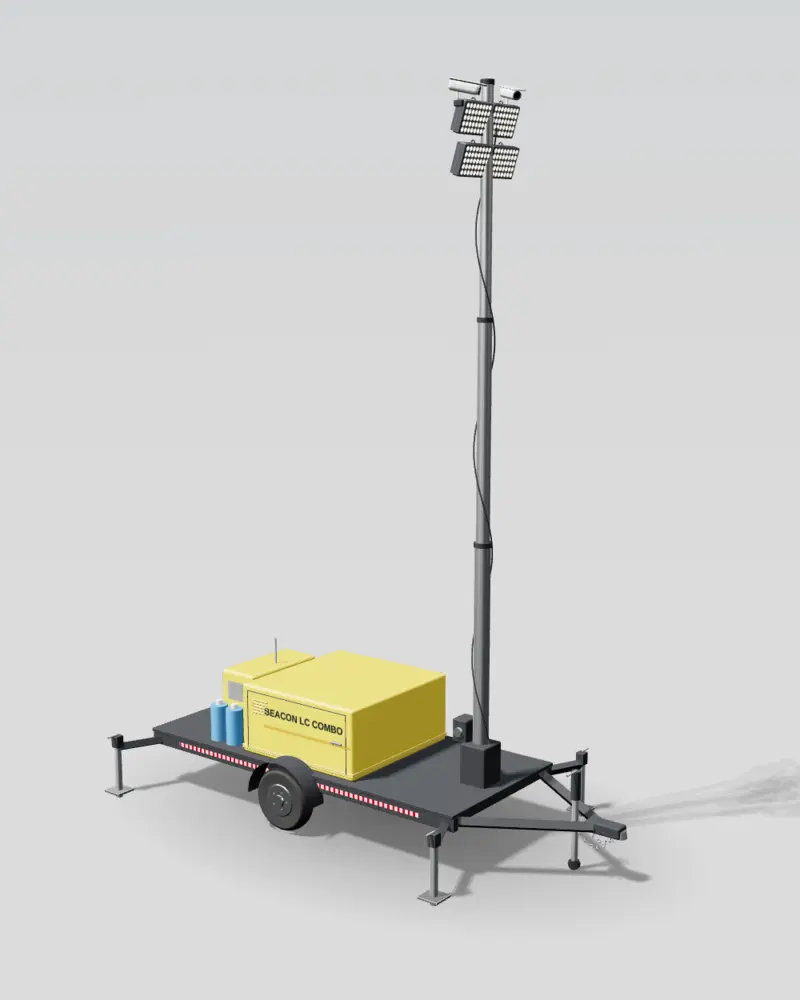
Four LED heads and two cameras on one mast. Lights the area and records it, so the cameras see colour at night instead of IR grey.
How the methanol fuel cell works on the Beacon LC Combo
A methanol fuel cell converts methanol and air into electricity, with water vapour and carbon dioxide as by-products. It does not run the load directly. Instead it starts automatically when the battery falls to a set level, tops the battery back up, and stops. The solar array, where fitted, still contributes, so the fuel cell fills only the gap the sun cannot cover.
A light tower draws much more power at night than a camera tower, so a fuel cell on a light tower supplements the battery rather than carrying the full lighting load. It reduces how often the battery runs flat in cloudy weather; confirm expected cartridge use for your hours of operation with the sales team.
In its standard build, the Beacon LC Combo carries a 20.5 kWh LiFePO₄ battery bank and a 2,400 W fold-out monocrystalline array.
When to choose this configuration
Choose methanol for long winter deployments, shaded sites or locations where a diesel generator's noise, exhaust or refuelling schedule would be a problem. Fuel cells are quiet and clean enough to sit near offices and homes, and a cartridge lasts weeks rather than days on a typical camera load.
The standard Beacon LC Combo ships with solar power. Choosing a methanol fuel cell changes the power system; the mast, sensors and chassis stay the same. The figures below describe the standard build, so ask for autonomy and runtime figures for this configuration.
Why people choose the Beacon LC Combo
The LC Combo puts four LED heads and two 4K cameras on one 25 ft electric mast. Because the area is lit, the cameras record in full colour at night rather than infrared grey, which makes clothing, vehicles and colours identifiable. Lights can also switch on when motion is detected.
- You want colour night video for evidence
- One trailer has to do the job of a light tower and a camera tower
- Lights switching on at motion is useful deterrence
Refuelling
Refuelling means swapping a sealed methanol cartridge, which takes a few minutes and needs no pumps or funnels. The app reports fill level, so a replacement can be brought on a scheduled visit. Store spare cartridges upright in a ventilated, locked space away from ignition sources, and follow the safety data sheet: methanol is flammable and toxic if swallowed.
This configuration in numbers
The 20.5 kWh LiFePO₄ bank gives the fuel cell a comfortable buffer: it can run in long, efficient charging cycles rather than starting and stopping often. At 3,600 lb / 1,633 kg dry, the Beacon LC Combo is a job for a half-ton or three-quarter-ton pickup with a properly rated hitch.
Maintenance
Fuel cells have few moving parts. Keep the air intake and exhaust clear of snow and debris, check hoses and fittings for leaks at every cartridge change, and follow the maker's service interval for filters. Record run hours from the app so service can be planned.
The mast is raised by an electric motor. Lower it before towing and before storms, keep the manual override tool with the trailer in case the battery is flat, and listen for changes in motor sound that suggest binding sections.
Winter operation
Fuel cells give off heat while running and many units run a frost-protection cycle in deep cold. Keep spare cartridges from freezing solid by storing them indoors, and keep the vent free of drifting snow. Methanol is the strongest option for sites where solar collapses in December and a generator is not welcome.
Specifications
| Lamps | 4 × 150 W LED, 5000 K |
|---|---|
| Cameras | 2 × 4K fixed bullet |
| Mast height | 25 ft / 7.6 m, electric |
| Solar array | 2,400 W fold-out monocrystalline |
| Battery bank | 20.5 kWh LiFePO₄ |
| Autonomy | 1.5 nights of lights and cameras without sun at full output, 3 nights with dimming |
| Connectivity | LTE router |
| Recording | On-board NVR, 4 TB |
| Dry weight | 3,600 lb / 1,633 kg |
| Power options | Solar, methanol fuel cell, 120 V shore power or diesel generator |
Specifications describe the standard solar build. Mast, cameras, battery and uplink can be changed on a custom build.