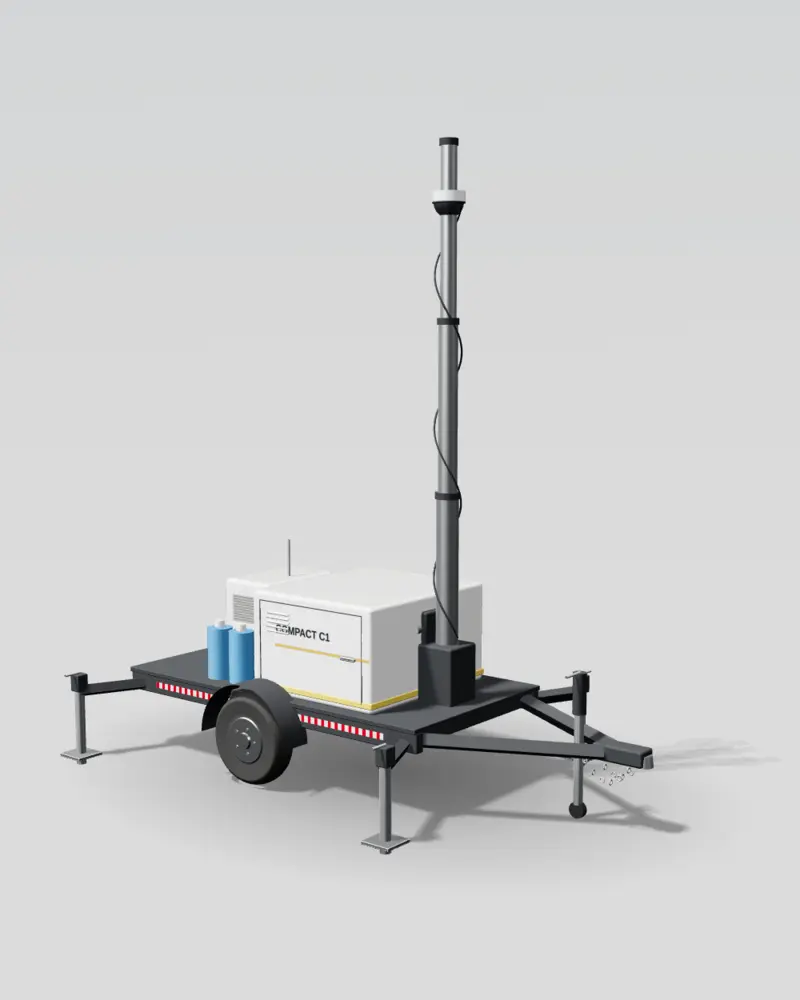
- Mast
- 15 ft
- Solar
- 400 W
- Weight
- 1,750 lb
Fits in one parking stall and tows behind any SUV. A single PTZ camera for retail lots, dealerships and short event rentals.
How the methanol fuel cell works on the Compact C1
A methanol fuel cell converts methanol and air into electricity, with water vapour and carbon dioxide as by-products. It does not run the load directly. Instead it starts automatically when the battery falls to a set level, tops the battery back up, and stops. The solar array, where fitted, still contributes, so the fuel cell fills only the gap the sun cannot cover.
Camera loads are steady and modest, which suits a fuel cell well: it only needs to replace what the panels miss, so a cartridge lasts a long time. The combination keeps a camera tower recording through weeks of overcast without any engine noise on site.
In its standard build, the Compact C1 carries a 5.1 kWh LiFePO₄ battery bank and a 400 W monocrystalline array.
When to choose this configuration
Choose methanol for long winter deployments, shaded sites or locations where a diesel generator's noise, exhaust or refuelling schedule would be a problem. Fuel cells are quiet and clean enough to sit near offices and homes, and a cartridge lasts weeks rather than days on a typical camera load.
The standard Compact C1 ships with solar power. Choosing a methanol fuel cell changes the power system; the mast, sensors and chassis stay the same. The figures below describe the standard build, so ask for autonomy and runtime figures for this configuration.
Why people choose the Compact C1
The C1 is the smallest unit in the range. It is the trailer you send when the site is a single lot, the job is short, or the only tow vehicle available is an SUV. One 4K PTZ camera covers a parking area or dealership row, and the 15 ft manual mast is raised by one person.
- You need one camera on a small lot and want the lowest tow weight in the range
- The unit will move often, for short rentals or events
- A crew without a pickup truck has to set it up alone
Refuelling
Refuelling means swapping a sealed methanol cartridge, which takes a few minutes and needs no pumps or funnels. The app reports fill level, so a replacement can be brought on a scheduled visit. Store spare cartridges upright in a ventilated, locked space away from ignition sources, and follow the safety data sheet: methanol is flammable and toxic if swallowed.
This configuration in numbers
With a 5.1 kWh LiFePO₄ bank, the Compact C1 has a modest buffer, so the fuel cell cycles more often in dark weather. Keep a spare cartridge on site through December and January. At 1,750 lb / 794 kg dry, the Compact C1 is light enough for many SUVs and half-ton pickups, though you should always check the vehicle and hitch ratings.
Maintenance
Fuel cells have few moving parts. Keep the air intake and exhaust clear of snow and debris, check hoses and fittings for leaks at every cartridge change, and follow the maker's service interval for filters. Record run hours from the app so service can be planned.
The mast is raised by hand. Inspect the winch cable for fraying and kinks at every move, keep the winch brake working, and never let the mast free-fall when lowering it.
The hitch is a 2 in ball, single axle. Check that the ball on the tow vehicle matches exactly and that the coupler latch is pinned.
Winter operation
Fuel cells give off heat while running and many units run a frost-protection cycle in deep cold. Keep spare cartridges from freezing solid by storing them indoors, and keep the vent free of drifting snow. Methanol is the strongest option for sites where solar collapses in December and a generator is not welcome.
Specifications
| Mast height | 15 ft / 4.6 m, manual |
|---|---|
| Cameras | 1 × 4K PTZ, 25× zoom |
| Solar array | 400 W monocrystalline |
| Battery bank | 5.1 kWh LiFePO₄ |
| Autonomy | 2.5 days without sun in deep winter, 4.5 in mild weather |
| Connectivity | LTE router |
| Recording | On-board NVR, 2 TB |
| Footprint | 9 ft × 5 ft |
| Hitch | 2 in ball, single axle |
| Dry weight | 1,750 lb / 794 kg |
| Power options | Solar, methanol fuel cell, 120 V shore power or diesel generator |
Specifications describe the standard solar build. Mast, cameras, battery and uplink can be changed on a custom build.