- Flight
- 40 min
- Range
- 5 km
- Mast
- 20 ft
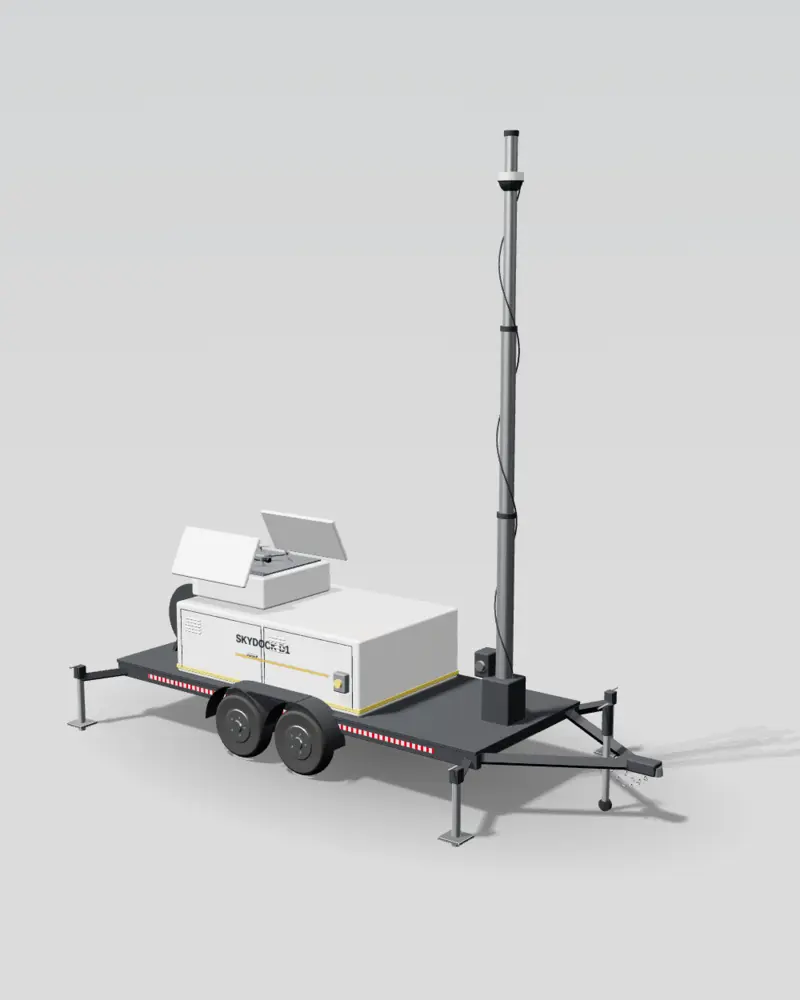
A drone dock and camera mast on one trailer. The drone launches on alarm, flies to the event and streams live video back.
How 120 V shore power works on the Skydock D1
The trailer plugs into a standard 120 V outlet on site, such as a pole, a building or a temporary power panel. A charger keeps the battery full and the load runs from the battery, so a power cut or a tripped breaker does not stop recording or lighting. The battery acts like a large uninterruptible power supply.
A camera trailer on shore power draws a small, steady current from the outlet. The battery keeps cameras and recorder running through outages, which matters because outages are exactly when some intruders strike.
In its standard build, the Skydock D1 carries a 20.5 kWh LiFePO₄ with shore input battery bank and a 2,000 W fold-out monocrystalline array.
When to choose this configuration
Choose shore power when the trailer will sit within reach of a reliable outlet for the length of the job: a dealership, a parking structure, a municipal yard or a building under renovation. It removes any dependence on sun or fuel and makes the battery a backup rather than the main source.
The standard Skydock D1 ships with solar power. Choosing 120 V shore power changes the power system; the mast, sensors and chassis stay the same. The figures below describe the standard build, so ask for autonomy and runtime figures for this configuration.
Why people choose the Skydock D1
The D1 carries a drone dock and a PTZ mast. On a radar or camera alarm, the quadcopter, with 4K and thermal cameras and 40 minutes of flight, is airborne in under 30 seconds and streams live video from above. It can also fly scheduled patrols, and the catalogue includes regulatory support for remote operations.
- The site is too large for fixed cameras to see every corner
- Operators need an aerial view of an alarm before dispatching
- Scheduled patrol flights would replace some guard rounds
Charging and power supply
There is no fuel. Use an outdoor-rated cord of the right gauge for its length, keep the connection off the ground and out of standing water, and plug into a GFCI-protected circuit. Set an alert in the app for loss of input power, so someone knows if the cord is unplugged or a breaker trips; the battery then runs the unit for its normal autonomy.
This configuration in numbers
A standard 120 V, 15 A circuit supplies far more than the Skydock D1 draws on average, so after an outage the battery is recharged from the outlet while the unit keeps running. Use a dedicated circuit where possible so other equipment cannot trip it. At 4,100 lb / 1,860 kg dry, the Skydock D1 is a job for a three-quarter-ton or heavier pickup with trailer brakes set correctly.
Maintenance
Inspect the cord and plug at every visit for cuts, crushed sections and heat damage. Check the inlet on the trailer is dry and its cover closes. Route the cord where vehicles will not drive over it, or protect it with a cable ramp. Test the outage alert occasionally by switching off the supply.
The mast is raised by an electric motor. Lower it before towing and before storms, keep the manual override tool with the trailer in case the battery is flat, and listen for changes in motor sound that suggest binding sections.
Winter operation
Cold has little effect on a shore-powered unit as long as the supply stays on, and the charger can feed battery heaters. Snow-clearing equipment is the main hazard: mark the cord route clearly and keep it out of plough paths.
Specifications
| Drone | Quadcopter, 4K + thermal, 40 min flight |
|---|---|
| Dock | Weatherproof, automatic charging |
| Response | Airborne in under 30 s |
| Cameras | 1 × PTZ on mast |
| Mast height | 20 ft / 6.1 m, electric |
| Solar array | 2,000 W fold-out monocrystalline |
| Battery bank | 20.5 kWh LiFePO₄ with shore input |
| Connectivity | 5G / LTE, satellite |
| Dry weight | 4,100 lb / 1,860 kg |
| Power options | Solar, methanol fuel cell, 120 V shore power or diesel generator |
Specifications describe the standard solar build. Mast, cameras, battery and uplink can be changed on a custom build.