Concerts, festivals, fairs, markets and sports events need temporary security, lighting, power and connectivity for a few days or weeks, then must leave the site exactly as they found it. Build, show days and tear-down each bring different risks.
Site profile
- Typical layout
- Gates, queues, stages, vendor rows, backstage compounds, parking and sometimes campgrounds, all temporary.
- Typical deployment
- Days to a few weeks, including build and tear-down.
- Power on site
- Sometimes available from the venue; often temporary.
- Normal after-hours activity
- Crews work late during build and tear-down; the site is quiet overnight on show days.
- When losses happen
- Load-in and load-out, when equipment moves and gates stand open.
- Seasonal pattern
- Summer weekends are busiest; winter markets add cold and long nights.
- Who responds
- Event security and police during the event; a monitoring centre overnight.
- Rules to check
- Event permits with security and lighting plans, temporary power inspections and accessible routes.
Main risks
- Crowd safety incidents that need clear video evidence
- Theft from vendor areas, backstage and equipment compounds
- Intrusion and theft during build and tear-down when fewer people are on site
- Dark walkways, campgrounds and parking areas
Guides
- Choosing a trailerEvents usually need four things from trailers: cameras, light, power and internet.
- Placement and coveragePlan positions on the event site map together with the safety officer.
- Power planningEvent schedules are known to the hour, which makes energy planning simple and accurate.
- Winter operationWinter festivals, holiday markets and outdoor rinks combine long nights with cold.
- Theft preventionLoad-in and load-out are the riskiest periods: expensive equipment arrives and leaves, gates stand open and staff are spread thin.
- Monitoring and responseDuring show days, the event's own security team and police may watch feeds from an operations centre.
- Rent vs buyAlmost all events rent, because units are needed for days and the fleet operator handles delivery, setup and removal to the event timetable.
- Permits and insuranceEvent permits often require a security plan, a lighting plan and sometimes a temporary power inspection; include trailer positions and power arrangements in them.
Recommended models
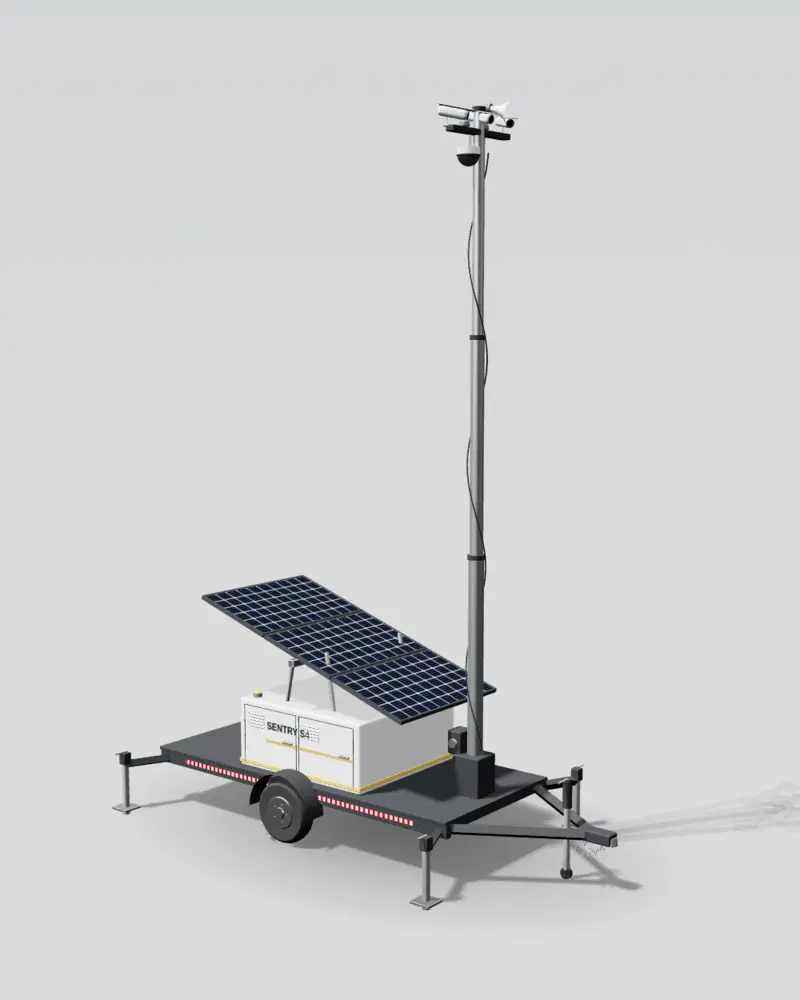 Solar surveillance trailer
Sentry S4
PTZ and fixed cameras over entries and compounds, with talk-down
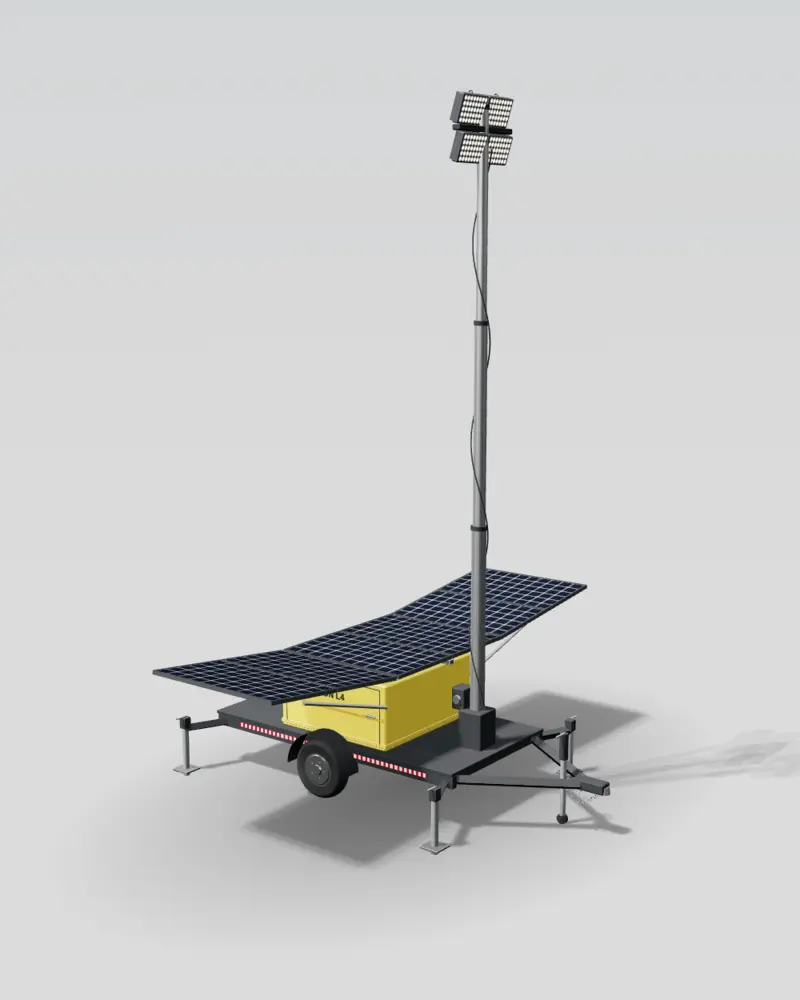 Solar LED light tower
Beacon L4
Silent light for walkways, parking and camping
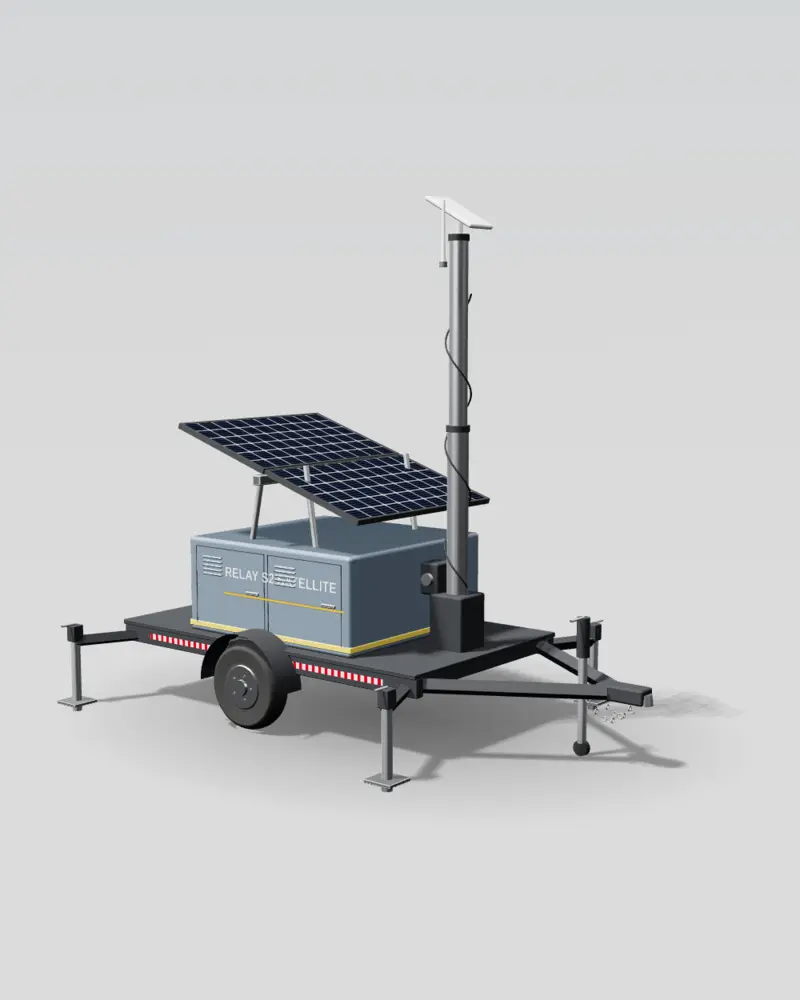 Satellite uplink trailer
Relay S2 Satellite
Internet in about ten minutes for staff, vendors and payment terminals
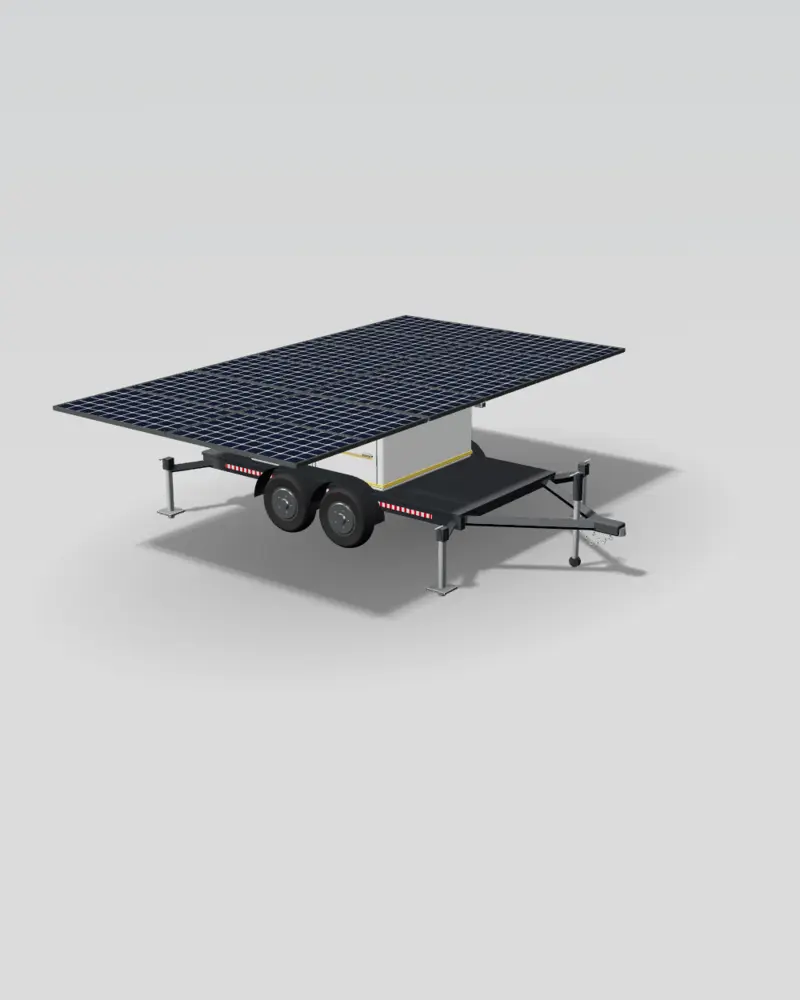 Solar power trailer
Fieldgrid P10
Quiet daytime and evening power for vendor rows and offices