Utility-scale solar farms cover hundreds of acres with long fences, rows of panels that block views, and inverters, cable and panels worth stealing. During construction they hold large stockpiles of material.
Site profile
- Typical layout
- Hundreds of acres of panel rows inside a long fence, with inverter pads, a substation and, during construction, laydown areas.
- Typical deployment
- Construction phase of months, then permanent coverage once energised.
- Power on site
- Plenty of sun, but connecting security equipment to plant power is usually restricted.
- Normal after-hours activity
- Empty at night except for occasional maintenance and vegetation crews.
- When losses happen
- Construction phase, when cable and panels are stored in the open, and long weekends.
- Seasonal pattern
- Snow and short days in northern farms; dust and heat in southern ones.
- Who responds
- Remote monitoring and police, often with long travel times.
- Rules to check
- Lender and insurer security requirements, aviation approvals for drones and landowner agreements on leased land.
Main risks
- Cable and copper theft from combiner boxes and trenches
- Panel theft during construction and operation
- Inverter and transformer vandalism
- Livestock and wildlife causing false alarms on long fences
Guides
- Choosing a trailerSolar farms are long and low, which favours detection over identification: radar or thermal along the fence, with PTZ confirmation.
- Placement and coveragePanel rows block ground-level views, so place masts high enough to see over them and along the fence lines.
- Power planningSolar farms have plenty of sun but strict rules about connecting to plant power, so security trailers normally run on their own solar.
- Winter operationSnow covers both the farm and the trailers, and remote sites may be hard to reach.
- Theft preventionOrganised thieves target cable in open trenches during construction and copper in combiner boxes afterwards.
- Monitoring and responseResponse times to remote solar farms can be long, so the aim is to detect early, verify quickly and warn intruders that they are seen.
- Rent vs buyDevelopers and EPC contractors usually rent during construction, when material risk is highest and the site layout changes constantly as rows go in.
- Permits and insuranceLenders and insurers often set security requirements for the construction phase, such as monitored cameras at laydown areas and gates, and may ask for evidence.
Recommended models
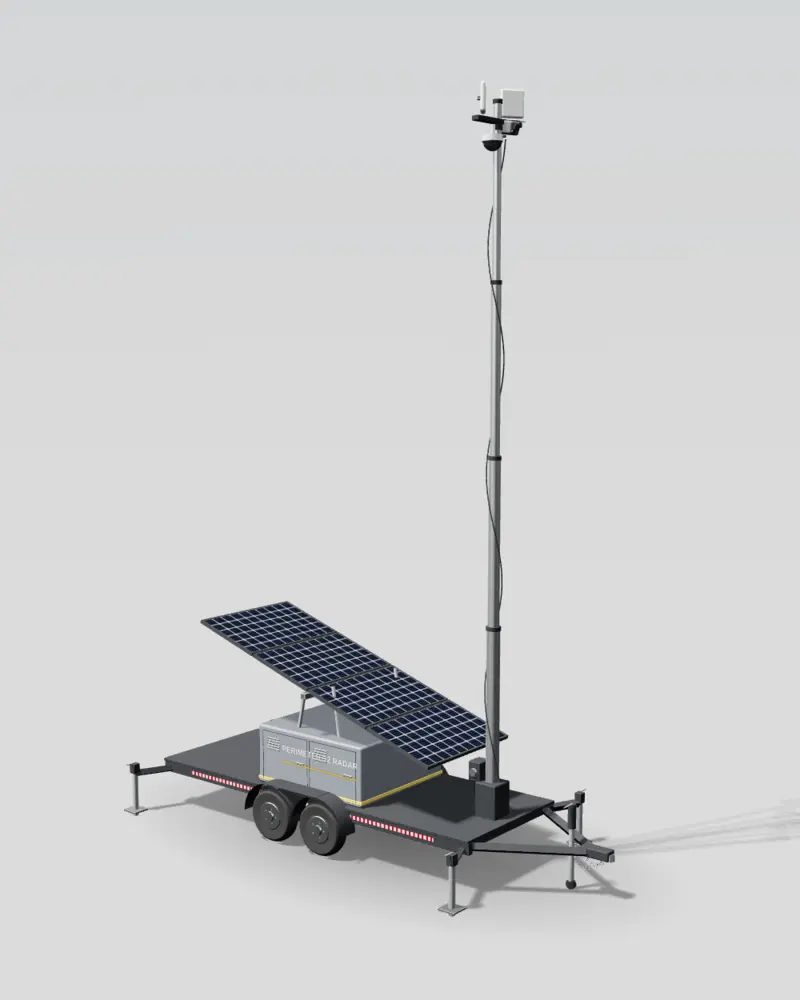 Radar and thermal trailer
Perimeter T2 Radar
360-degree radar detection with thermal cueing on long fences
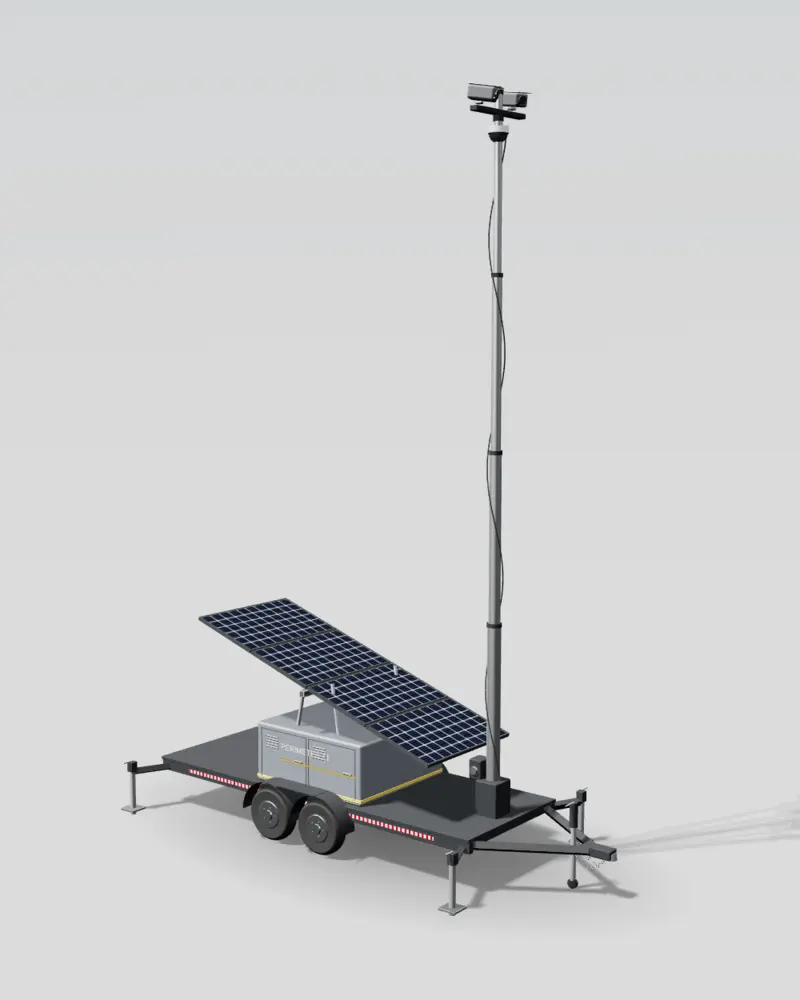 Thermal surveillance trailer
Perimeter T1
Thermal cameras for fence lines where radar is not needed
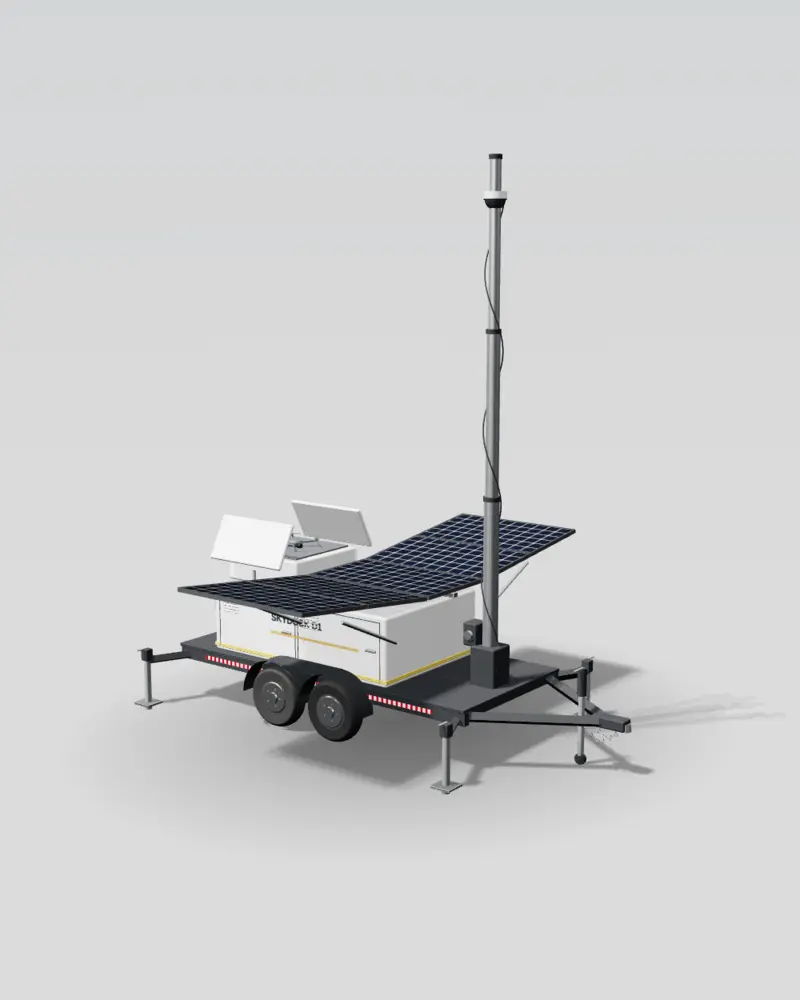 Drone dock trailer
Skydock D1
Drone launches to an alarm anywhere on a large site
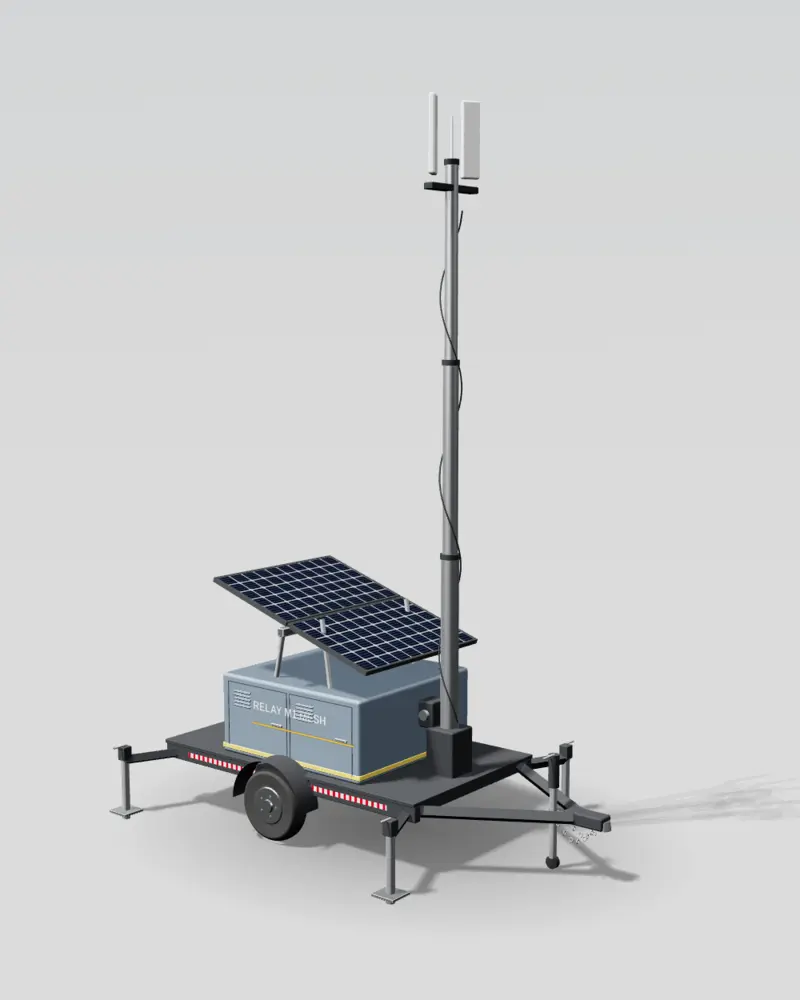 Mesh relay trailer
Relay M1 Mesh
Mesh network to carry video across hundreds of acres