Construction sites change every week, sit empty every night and hold portable, resaleable materials in the open. Mobile trailers suit them because they need no trenching or hard-wiring and move as the site moves.
Site profile
- Typical layout
- A fenced or hoarded site with one or two vehicle gates, a laydown area, containers, a site trailer and a structure that grows week by week.
- Typical deployment
- The length of the build, from a few months to several years, with units moving as phases change.
- Power on site
- None at first; temporary utility power often arrives part-way through the project.
- Normal after-hours activity
- Usually empty from evening to early morning, apart from occasional concrete pours, deliveries and patrols.
- When losses happen
- Nights, weekends and long holiday shutdowns, and soon after deliveries of copper, cable or tools.
- Seasonal pattern
- Projects start year-round; winter work brings short days, snow and frozen ground.
- Who responds
- A monitoring centre, the site superintendent or a keyholder, and local police for verified intrusions.
- Rules to check
- Street-use permits for units outside the boundary, builder's risk policy conditions and privacy notices at entrances.
Main risks
- Copper wire, cable reels and transformers stolen from laydown areas
- Tools and small equipment taken from containers and gang boxes
- Fuel siphoned from machines and tanks
- Vandalism and trespass, especially in partly built structures
Guides
- Choosing a trailerStart with the stage of the build.
- Placement and coveragePut the first unit where it sees the main gate and the laydown area together; most site thefts involve a vehicle, and vehicles use the gate.
- Power planningMost construction camera units run happily on solar for the length of a build.
- Winter operationWinter construction brings short days, snow piled by ploughs, and hoarding that shades low sun.
- Theft preventionOrganised copper theft usually involves a vehicle, a few minutes and some knowledge of the site, often gained during a daytime visit.
- Monitoring and responseConstruction sites have legitimate after-hours activity: concrete pours, deliveries, security patrols and staff returning for tools.
- Rent vs buyMost contractors rent for single projects and buy once they have enough overlapping projects to keep units busy.
- Permits and insuranceTrailers parked inside the site boundary rarely need separate permits, but units on a street, sidewalk or public right of way usually need a municipal encroachment or street-use permit.
Recommended models
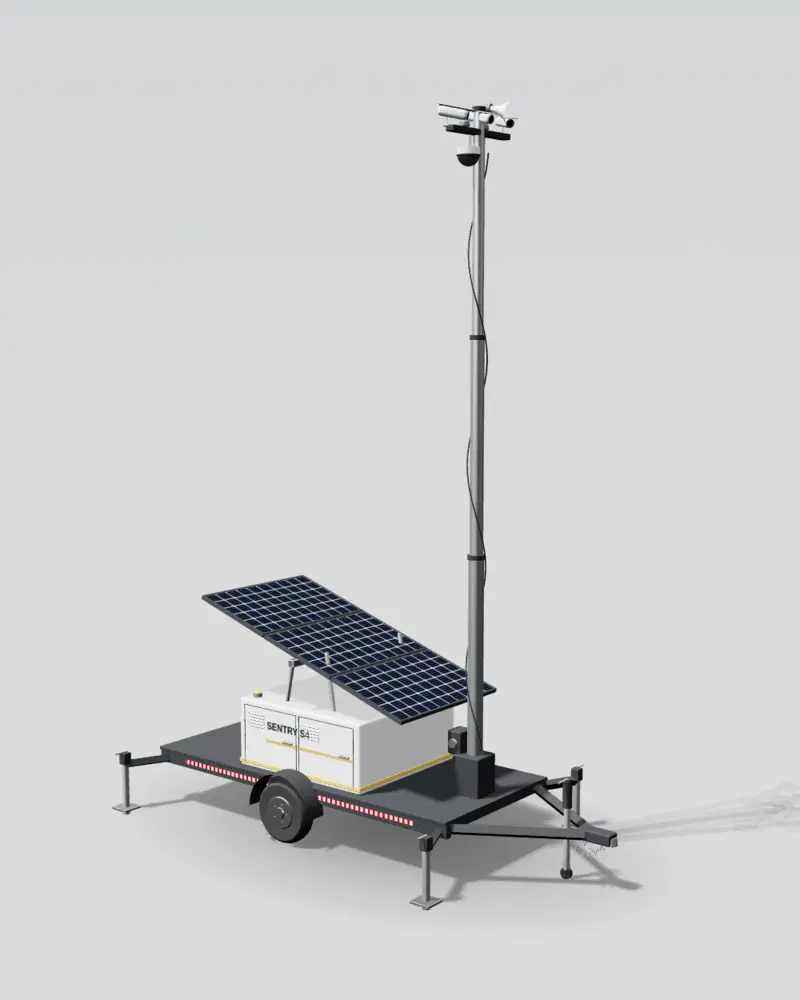 Solar surveillance trailer
Sentry S4
Covers a full perimeter with PTZ, fixed cameras and talk-down; the default for most sites
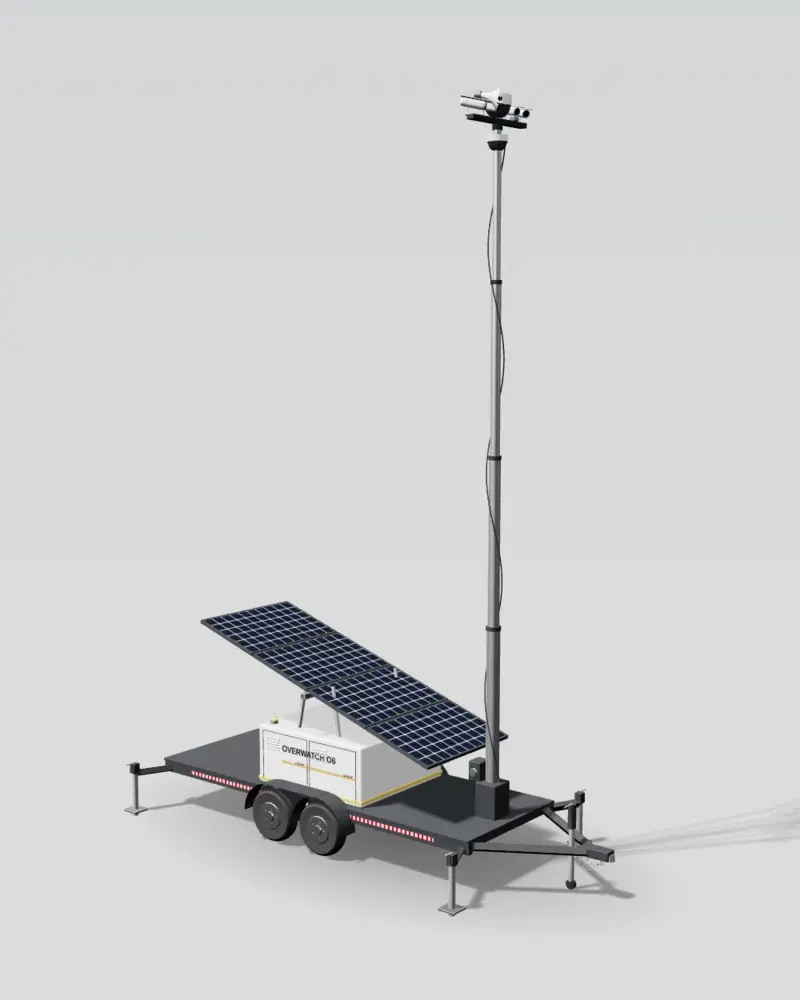 360° surveillance trailer
Overwatch O6
One unit for large laydown areas and yards up to the catalogue's 5 acres
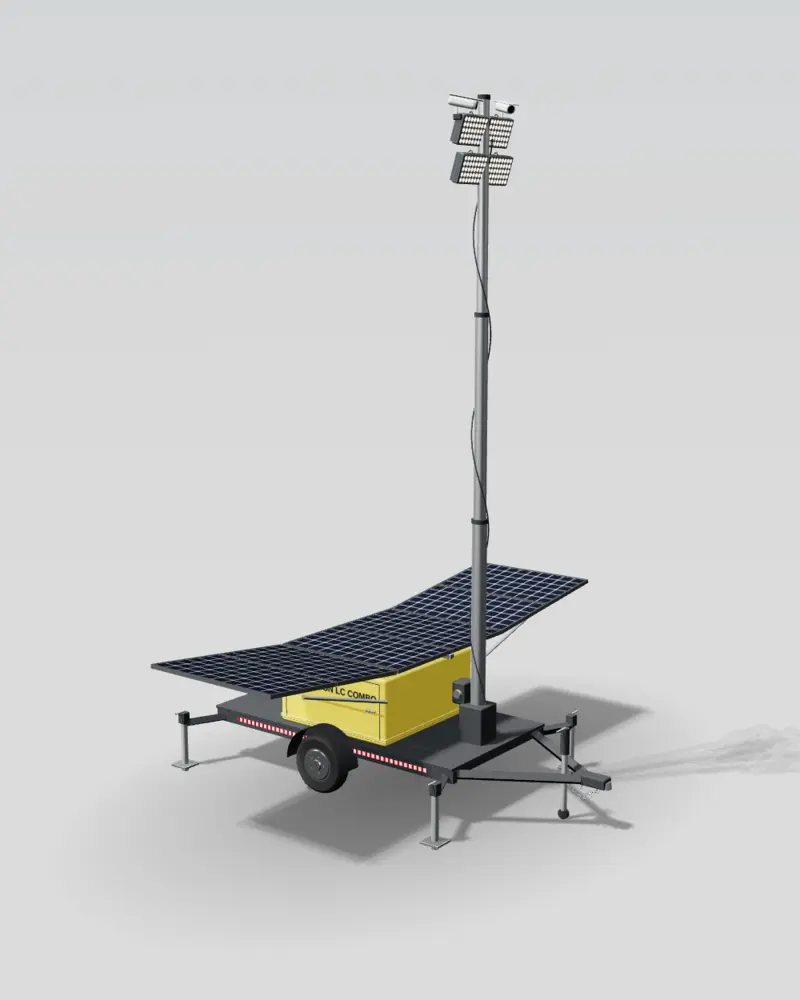 Light and camera tower
Beacon LC Combo
Lights the compound and records it in colour
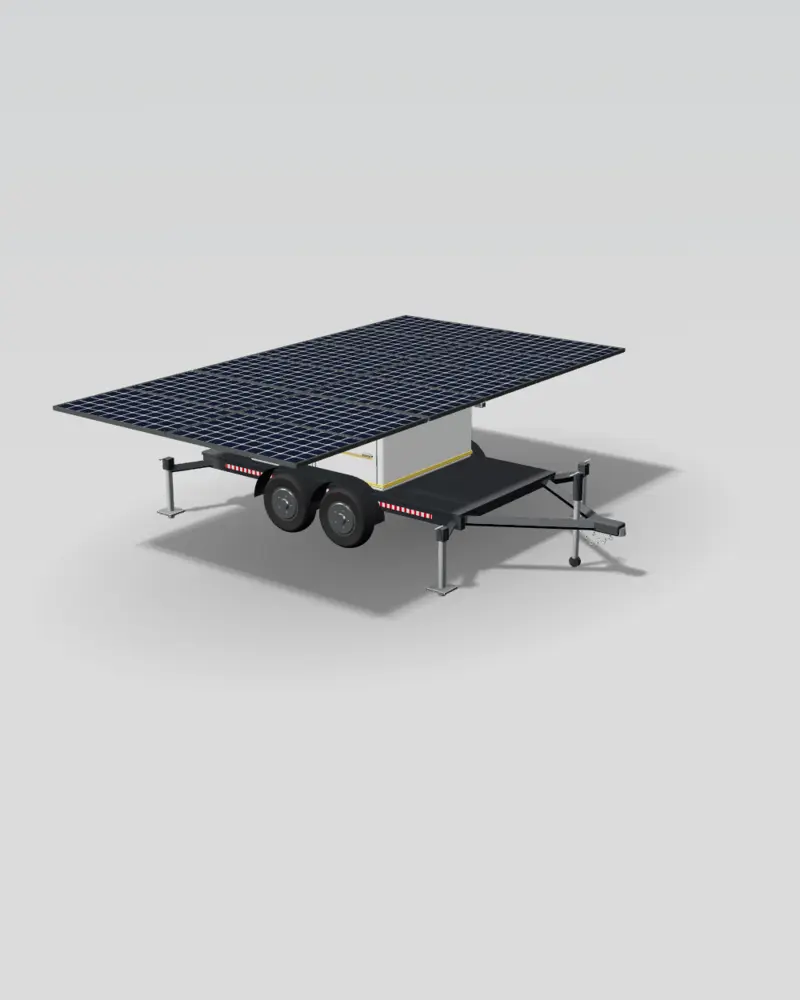 Solar power trailer
Fieldgrid P10
Replaces a diesel genset for the site trailer and tool charging