Cities and police services use mobile trailers for crime hot spots, parks, public works yards, road work zones, encampments and special events. The appeal is speed: a unit can be in place within hours and moved when the problem moves.
Site profile
- Typical layout
- Anything from a park or street corner to a works yard or a highway work zone.
- Typical deployment
- Days to weeks for hot spots; months for facilities; one night at a time for road work.
- Power on site
- Rarely available on streets and in parks; often available at facilities.
- Normal after-hours activity
- Public spaces see legitimate activity at all hours.
- When losses happen
- Depends on the problem being addressed; hot spots often peak at night and weekends.
- Seasonal pattern
- Event season and road work season in summer; winter brings snow clearing around units.
- Who responds
- Police, a real-time crime centre or a contracted monitoring centre.
- Rules to check
- Privacy impact assessments, public notice, plate data retention limits and published deployment policies.
Main risks
- Hot-spot crime and repeat calls for service
- Theft and vandalism at public works yards and facilities
- Worker and driver safety in night road work zones
- Public events, protests and emergency scenes
Guides
- Choosing a trailerHot-spot deployments work largely by being seen, so a visible unit with PTZ detail and talk-down, such as the Sentry S4, is the usual choice.
- Placement and coverageFor deterrence, place units where they are clearly visible from the street, with signage.
- Power planningHot-spot and park deployments often last days to weeks with no power available, which suits solar camera units.
- Winter operationGive snow clearing crews the location of every deployed unit so ploughs and sidewalk machines avoid outrigger pads and cords.
- Theft preventionPublic works yards lose fuel, tools, copper and catalytic converters from fleet vehicles.
- Monitoring and responseMany police services stream trailer feeds to a real-time crime centre.
- Rent vs buyCities and police services commonly own a core fleet for ongoing hot-spot and facility work, because they deploy units most weeks of the year and want control over configuration and data.
- Permits and insurancePublic-sector video and plate recognition usually require a privacy impact assessment, public notice and a published retention schedule; plate data in particular is often limited by policy or law.
Recommended models
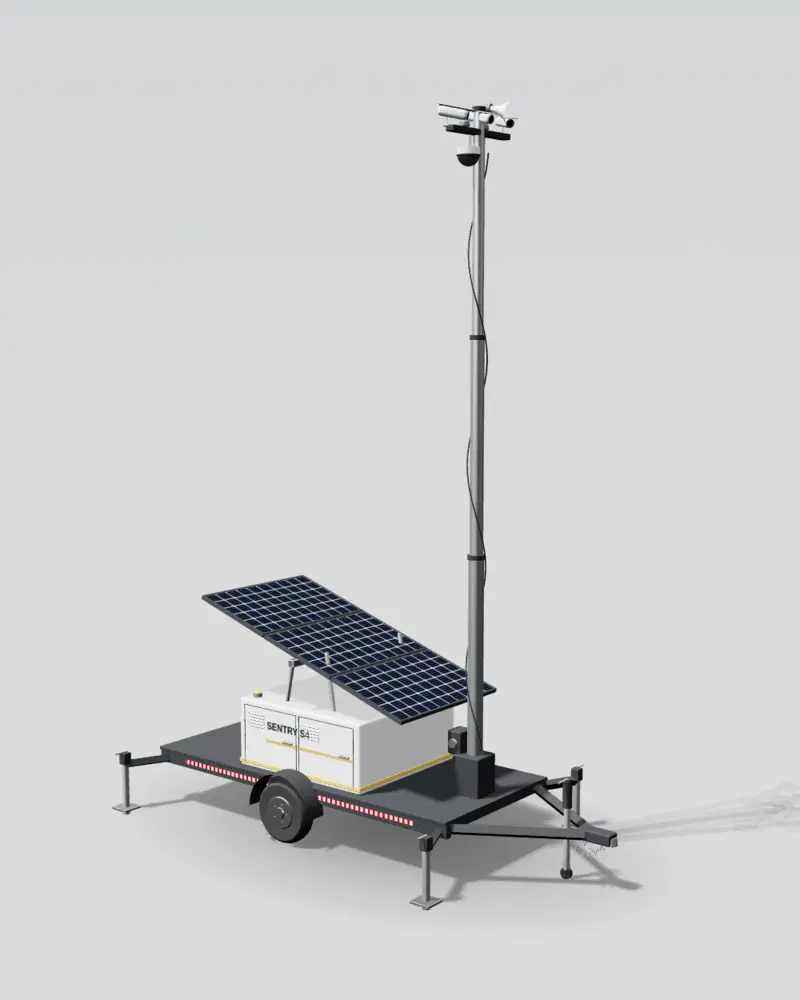 Solar surveillance trailer
Sentry S4
Visible, rapid-deploy coverage with PTZ detail and talk-down
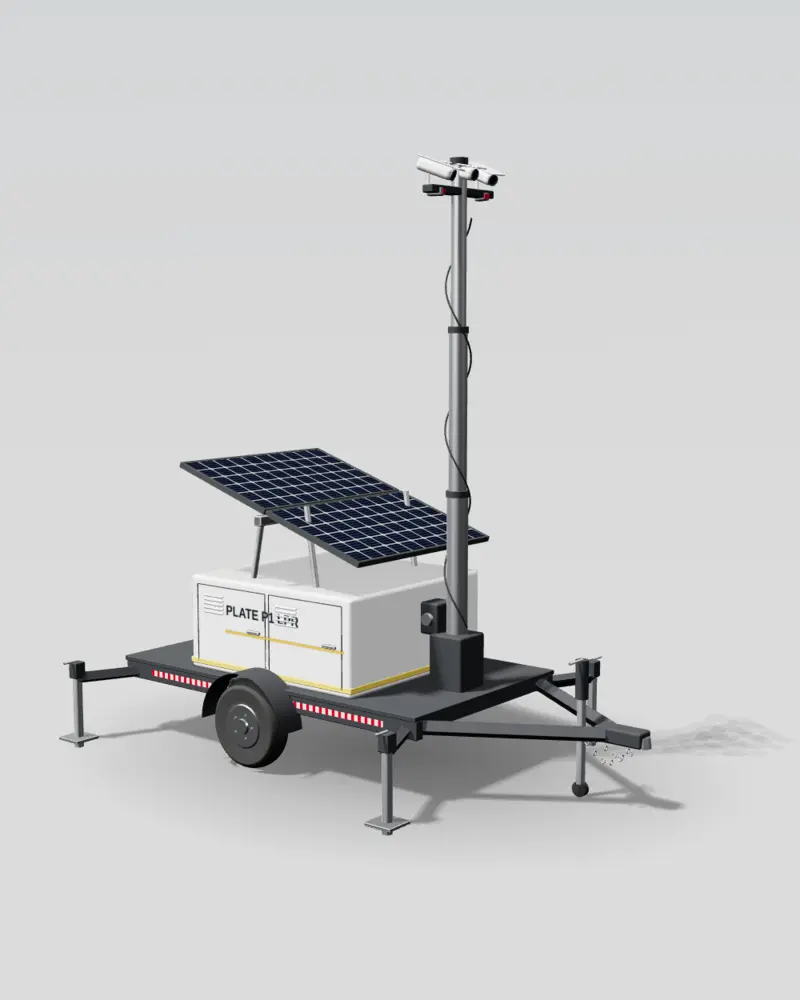 Licence plate recognition trailer
Plate P1 LPR
Plate reads with hotlist alerts and searchable history
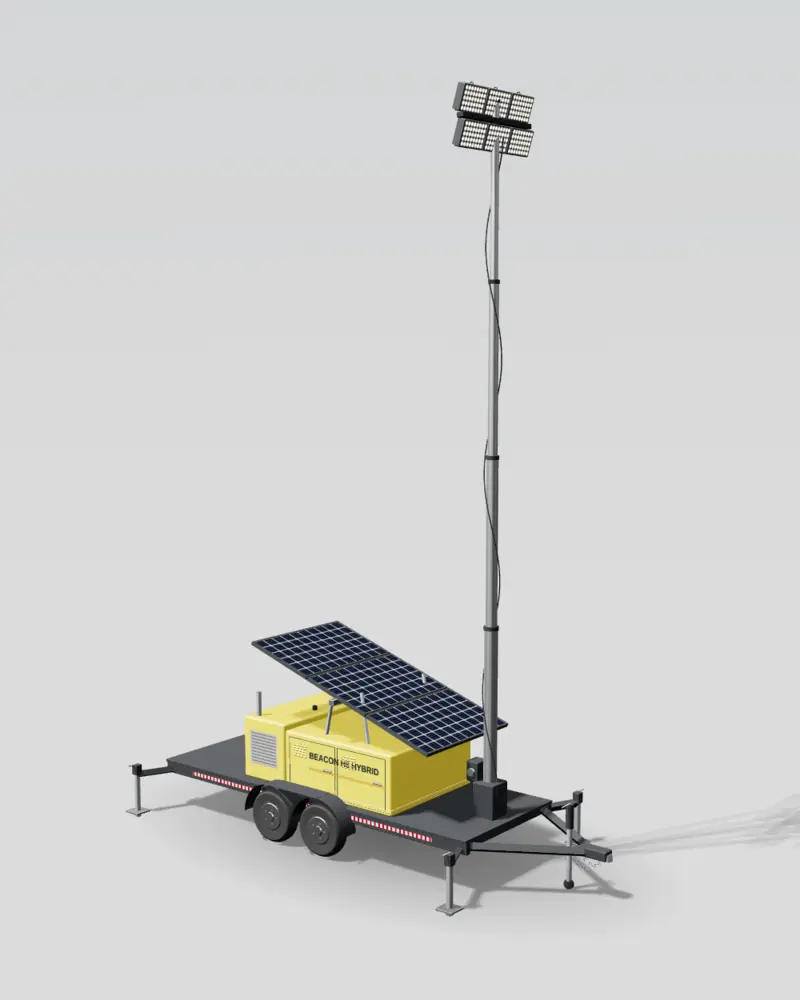 Hybrid LED light tower
Beacon H6 Hybrid
120,000 lumens all night for road crews, with generator backup
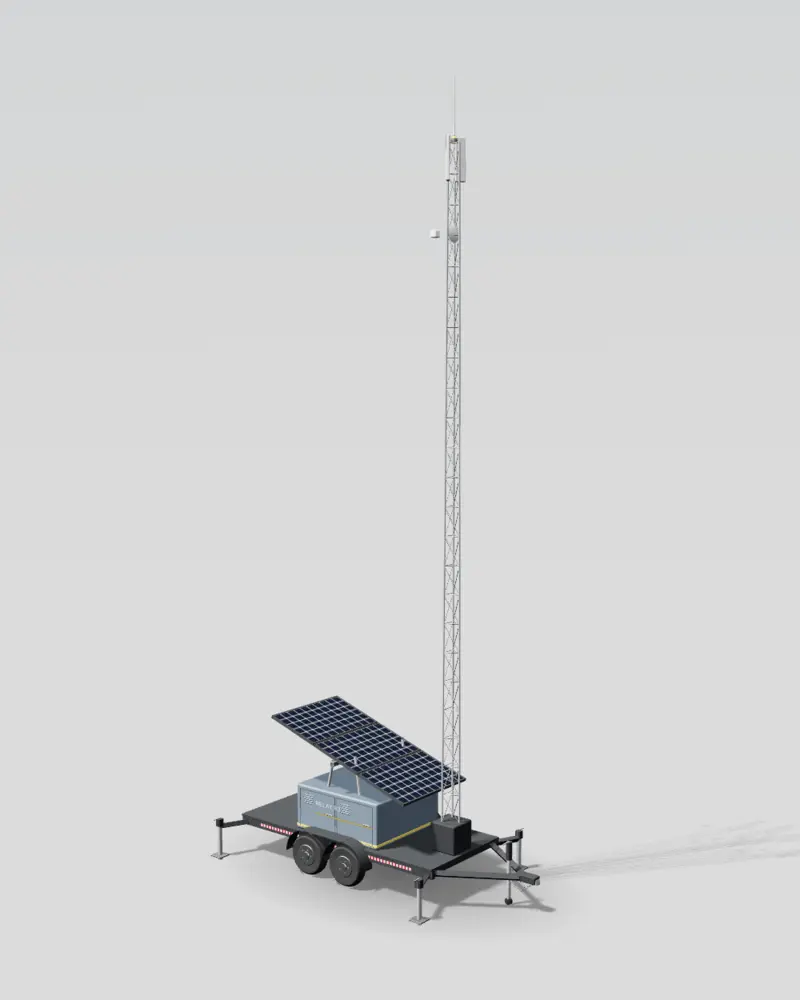 Communications trailer
Relay R3
Communications for emergency scenes and shelters