Remote camps house crews for construction, resource, forestry and emergency projects, often hours from towns and far from grid power and cellular service. They need power, communications, lighting and security together, and they move when the project does.
Site profile
- Typical layout
- Accommodation, kitchen and recreation units, offices, parking, fuel station and laydown, often in a cleared area far from towns.
- Typical deployment
- The length of the project, from weeks to several years.
- Power on site
- None from a grid; generators or hybrid power hubs supply everything.
- Normal after-hours activity
- Shift changes and night shifts mean people move around at all hours.
- When losses happen
- Fuel and tool theft at night; opportunistic theft when camps are lightly staffed.
- Seasonal pattern
- Extreme cold, long nights and seasonal road access in the north.
- Who responds
- Camp security and medics on site, with remote monitoring as backup.
- Rules to check
- Land-use permits, fuel storage and spill rules, noise limits and radio equipment approvals.
Main risks
- Theft of fuel, vehicles and equipment from camp yards
- Worker safety at night between accommodation, kitchens and parking
- No reliable communications for crews or for emergencies
- Generators running round the clock for small loads
Guides
- Choosing a trailerA camp is a small town, and trailers can supply its infrastructure.
- Placement and coverageLay out units with the camp plan: power trailer near the main loads, comms trailer at a high, clear point with a view of the sky, lights along walking routes between accommodation, kitchen and parking, and cameras covering the fuel station, vehicle park and entrance.
- Power planningCamps traditionally run large generators around the clock, even when the load at 3 a.m.
- Winter operationWinter camps face extreme cold, long nights and roads that may close in storms or spring thaw.
- Theft preventionCamp yards hold fuel, vehicles and tools, and the surrounding area may be completely empty at night.
- Monitoring and responseCamp security staff may monitor feeds on site, with a remote centre as backup overnight.
- Rent vs buyMost camps follow a project and move on, so renting a complete package of power, communications, lighting and security is common and keeps capital off the project's books.
- Permits and insuranceCamps on Crown, public or leased land need land-use permits that may cover equipment placement, fuel storage, noise and lighting.
Recommended models
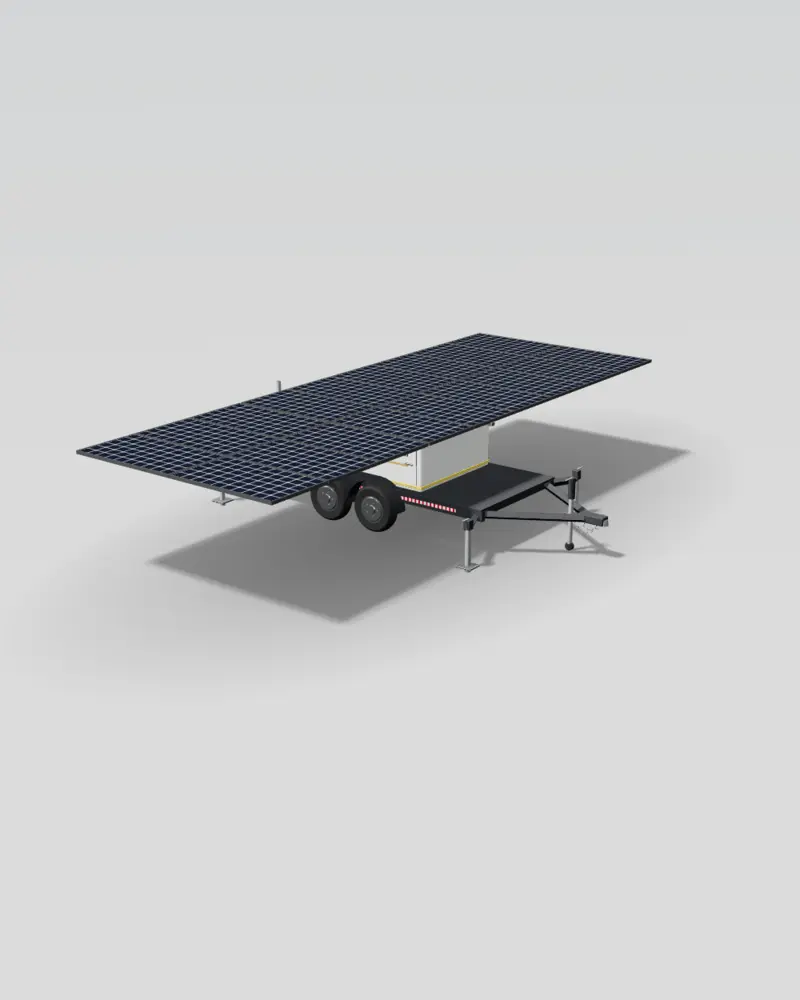 Hybrid power trailer
Fieldgrid P20 Hybrid
61 kWh battery, 7.2 kW solar and a 20 kW auto-start generator as the camp power hub
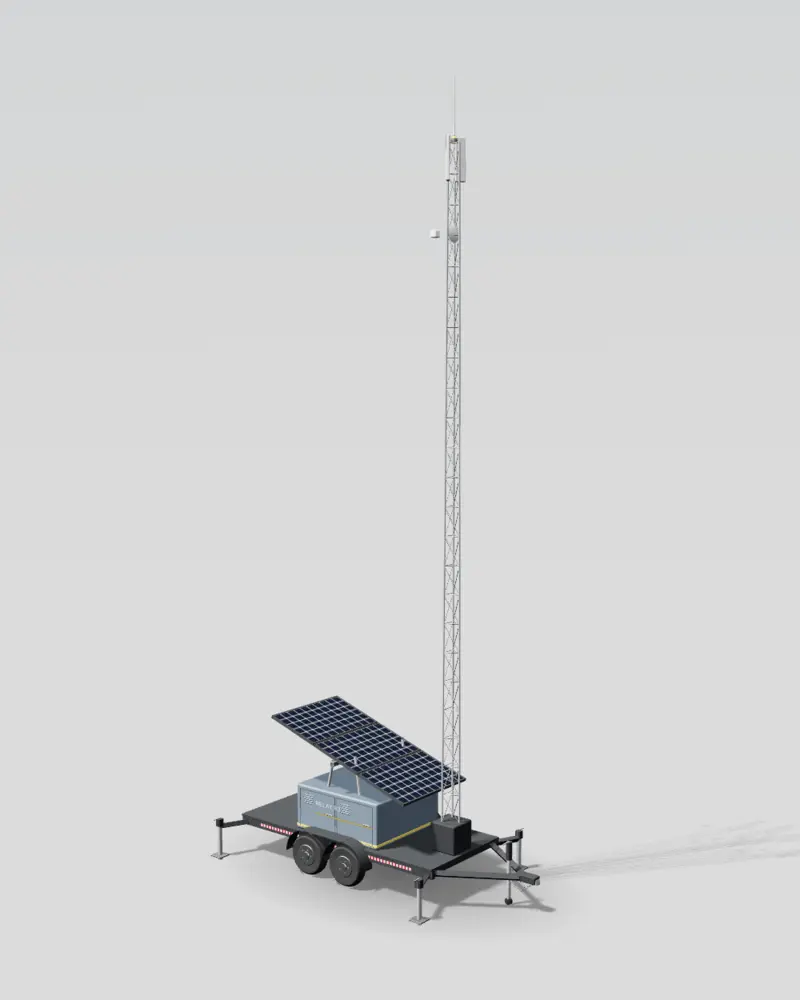 Communications trailer
Relay R3
Boosted cellular, satellite internet and a 2 km mesh for the whole camp
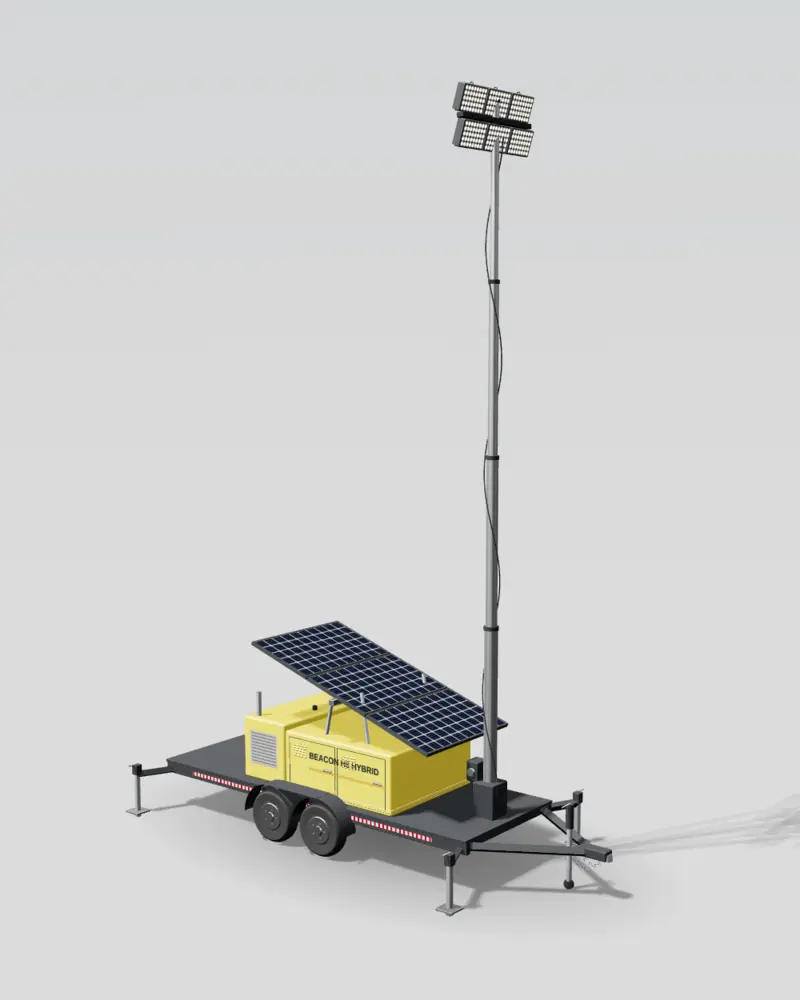 Hybrid LED light tower
Beacon H6 Hybrid
High-output light for parking and laydown with generator backup
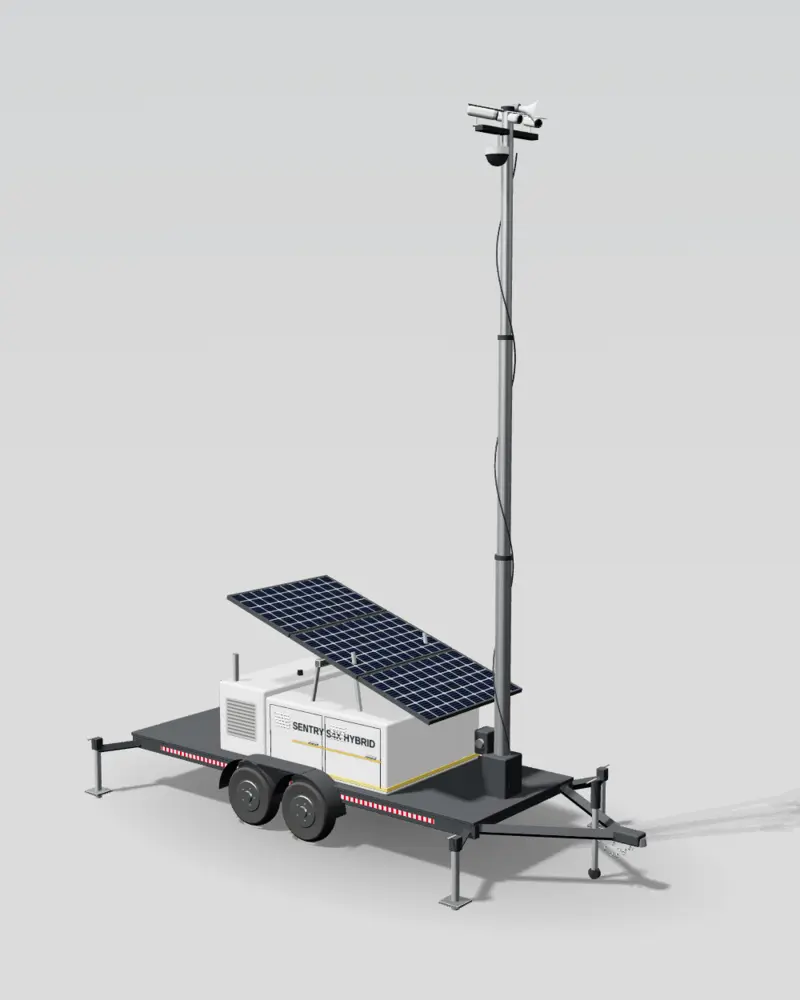 Hybrid surveillance trailer
Sentry S4X Hybrid
Camera and talk-down package that runs through remote winters